
OUR APPROACH
OUR APPROACH
Introduction
We are backed by founders of some of India’s most iconic start-ups, alongside the investors who backed them early. Their experience shapes our venture philanthropy approach, giving exceptional founders the conviction, capital and partnership to turn ambitious ideas into transformative organisations.
Many of the ideas capable of transforming India emerge long before conventional funding is willing to commit, when the risk is highest and the proof is thinnest. That is where we come in: committing early, and staying with founders as they build the evidence and momentum to reach population scale.
Approach
Over the past two decades, India’s venture ecosystem has produced unicorns that have transformed how millions of Indians live. We believe social innovation is ready for a similar transformation, grounded in the realities and aspirations of the next half billion.
The organisations we believe can become impact unicorns share three defining characteristics:
Organisations solving social challenges through breakthrough technology, novel delivery models or operational innovation.
For example:

Solutions delivering measurable, deep improvements that meaningfully change people’s lives.
For example:

Models capable of reaching a significant share of the people who need them through sustainable, scalable approaches.
For example:

Impact unicorns take 5–10 years to build. ACT comes in as early as the idea or prototype stage, and stays the course. We were among Rocket Learning’s first funders, the first institutional funder of Khushi Baby’s domestic entity, and a major institutional backer of OHCN. Their journeys shape how we fund today.
The Team



Managing Partner


Partner

Director (Volunteer)

Chief of Staff

Manager (Volunteer)

Manager

Manager (Volunteer)

Manager

Associate

Lead

Manager

Manager

Associate
ACT was born in 2020 when leaders from India's technology, venture capital and startup ecosystem came together to mobilise philanthropic capital, expertise and networks in response to the COVID-19 pandemic.
What began as an urgent response to a national crisis has evolved into a long-term commitment to backing founders building solutions to India's most pressing developmental challenges.

ACT 1.0
As the country faced unprecedented pressure on its healthcare system, ACT worked alongside governments, nonprofits and technology partners to strengthen healthcare infrastructure, expand access to oxygen and critical care, support vaccination efforts, and enable public health innovation at scale. In doing so, it demonstrated how philanthropy, entrepreneurship and technology can come together to respond to complex challenges with speed, collaboration and purpose.
mobilised
hospitals supported
vaccine doses commissioned for vulnerable groups
volunteers and 70+ NGO partners mobilised
2020
2022–2025
ACT 2.0
The pandemic surfaced a broader gap: India's most promising social innovations often struggle to access the early-stage, flexible capital they need to grow.
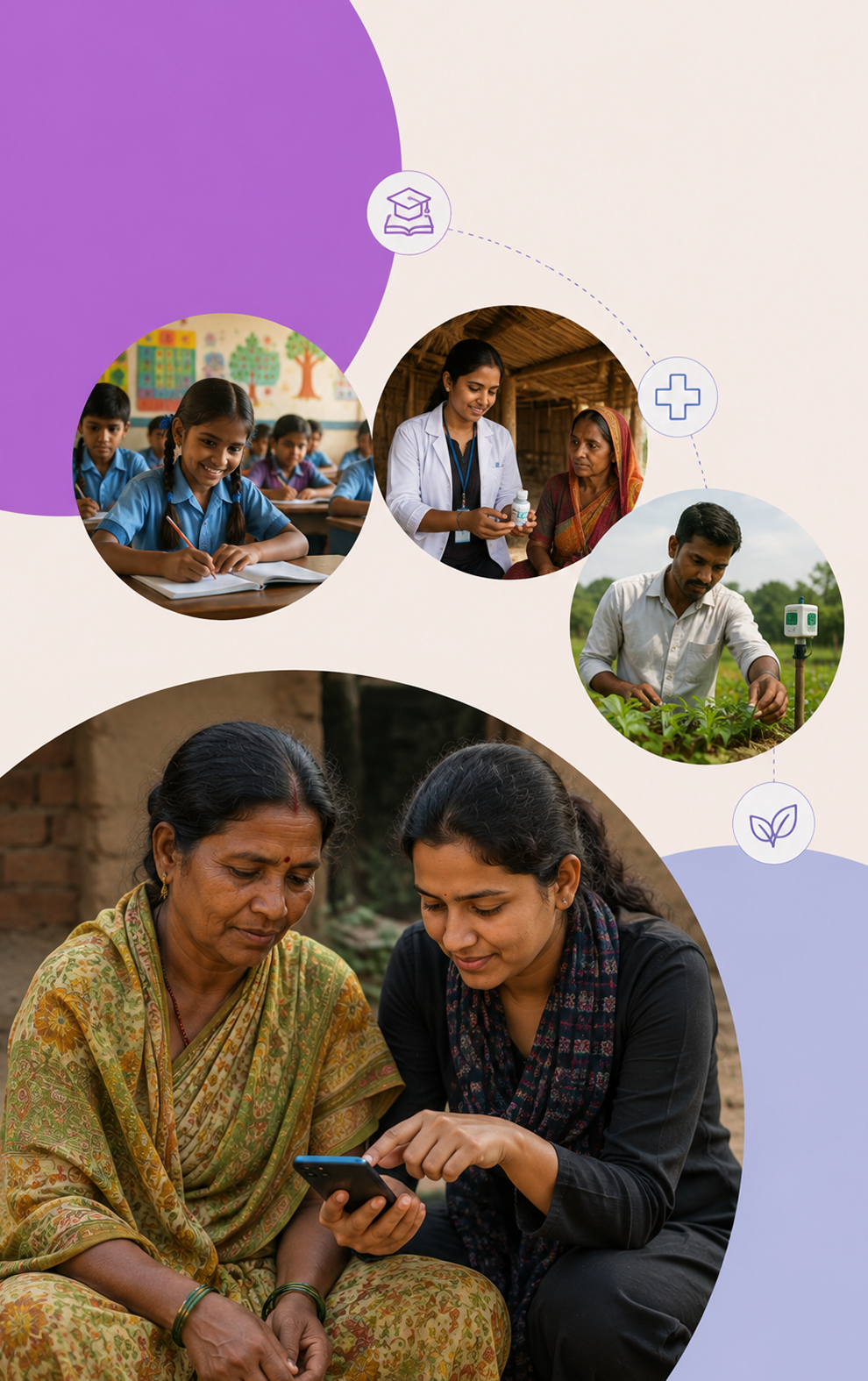
Building on the relationships and conviction developed during the COVID-19 response, ACT evolved into a venture philanthropy platform focused on backing exceptional founders solving India's hardest social challenges. By combining venture-building principles with catalytic philanthropy, ACT began supporting organisations across education, health and environment with early, flexible capital and long-term partnership.
Over the next five years, this approach demonstrated that when bold innovation is backed early, it can create meaningful impact at scale.
deployed
organisations backed
lives impacted
Impact Multiple of Money

ACT 3.0
In 2026, ACT has entered its next chapter.
Through ACT 3.0, we are bringing our capital together into a substantially larger fund, giving us the means to come in earlier and take bigger bets on bold innovation. A ladder of grant categories now lets us stay with founders well past the first cheque, backing them as they move from early promise to proven scale.
Other points of evolution include:
As we deepen this model, our ambition is to help exceptional founders build enduring, category-defining institutions that transform lives at population scale.
2026 and beyond